Momentum: An Insidious Factor
I call something “an insidious factor” if it 1) has an enormous impact on our lives and 2) we don’t think about it, or at least not nearly as much as we should. As an example, environments are an insidious factor that most people don’t pay enough attention to. We all know that who we spend our time with, where we live and what field we work in are important choices regarding where we end up in life. Yet, it can be difficult to notice that an environment is obstructing our goals when we’re living in it. It’s usually only when we leave an environment, such as a relationship or a town, that we finally realize how big of a role it had to play. That’s why it’s insidious.
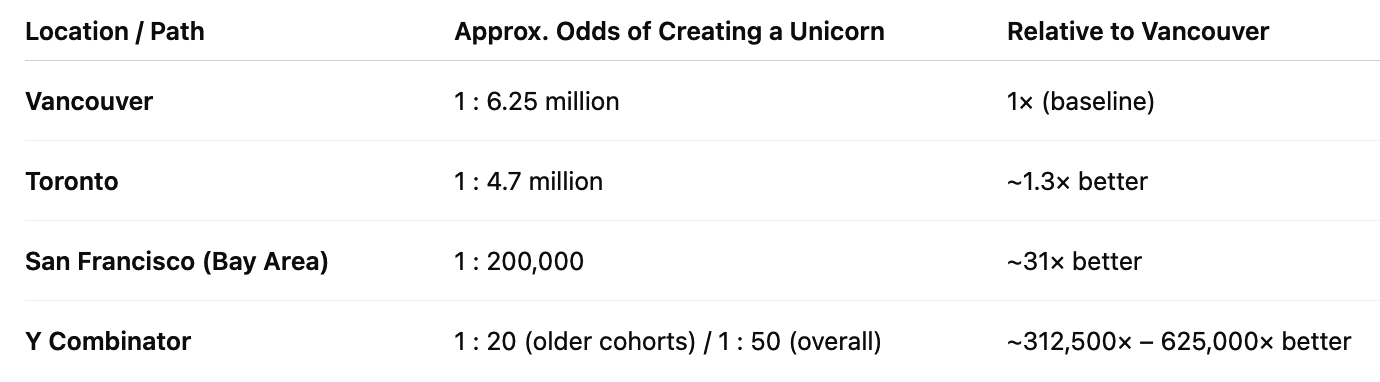
As an entrepreneur, I found it particularly shocking when I realized simply moving from Vancouver to San Francisco would improve my odds of success thirty-fold. That’s the power of an insidious factor. I knew environment was important, I just didn’t realize how much.
Momentum is another example of an insidious factor. In physics, momentum is the "quantity of motion" an object has, calculated as the product of its mass (𝑚) and velocity (𝑣), represented by the formula 𝑝 = 𝑚𝑣. Similarly, I would loosely define momentum in life as the size our dreams multiplied by how quickly we’re making progress towards them. To have large momentum in life, you want big dreams and lots of visible progress.
Why is momentum an insidious factor? To set the stage, here’s my personal experience of how social anxiety develops. First, an individual isolates themselves due to life circumstances such as a traumatic event. Someone invites them out to a party or event, but because they haven’t been out in a while, they say no. Because they don’t go, their social skills continue to worsen. They feel further isolated, and their anxiety further increases. This continues in a negative feedback loop.
My friend Ally likes to say that “humans fall into holes sometimes” which I believe conveys a lot. Many of my friends who I’ve seen “fall into holes” usually tend to do so through a negative feedback loop like this. They have a traumatic event → which causes them to isolate → which causes people who would otherwise be supporting them to not intervene → which further increases social anxiety → which causes further isolation → and so on.
This exemplifies a lack a momentum. The inertia of not getting out of the house and seeing friends brings about more of that behavior. In other words, an object at rest stays at rest.
However, an object in motion stays in motion. Imagine someone who gets out of the house and sees their friends → they’re invited to more events → they meet new people at those events → who invite them to even more events. So momentum works both for us, and against us, and requires sufficient effort (in physics, an applied force) to change.
Once you notice this, the pattern becomes clear across many parts of life. Why is the first month of going to the gym so difficult? Because you need to overcome inertia. Once you’re already going to the gym, you have momentum, and it’s no longer as difficult to keep going.
To apply this in a practical way to one’s life, it seems fruitful to think in terms of stepping stones. What’s one small win you could get within a week that would give you a tiny bit of momentum? And then how do you jump to the next stone off of that one?
A surprising benefit is that momentum works across domains, not just within one. If you get more fit, you might find that people start respecting you more, which makes you more confident. Because you’re more confident, you might ask for a promotion or apply to better jobs. If you get those, you might suddenly find yourself with more money to hire a personal tutor to learn something new. You get the idea.
I often think about why it was that I, a student who nearly failed out of Waterloo with a 57 average in first year, was able to come back and maintain an 85 average for the rest of undergrad. Not only did I average 85s, I also landed jobs, had relationships and picked up photography and other hobbies while in school. I believe one of my key advantages back then was I had lots of momentum. My goal for 2026 is to regain some of that momentum that I’ve lost.